I built a 4,000 sq ft university recreation center inside a Singapore campus in January 2025 with one question from the dean of student affairs: can a venue built around 10-pin bowling and archery — not a generic arcade, not a fitness room, not a gaming lounge — earn its own operating budget without a student fee subsidy? By month seven the answer was $16,400 a month, with 38% from student activity fees, 34% from public access after 6pm, and 28% from corporate rentals on weekends. The format works because both activities are Olympic-recognized, skill-based, and naturally competitive: students sign up for intramural leagues, faculty book team-building events, and the public pays premium rates on weeknights. This is the full breakdown of how I built it, what it costs, and the three revenue models that make it profitable on a campus budget.
A university recreation center has three constraints that most off-the-shelf formats ignore. First, it must justify its existence to a budget committee that compares every line item against a new computer lab or scholarship fund — arcade games that "entertain" do not pass that test, but Olympic-recognized sports do. Second, it must serve three different constituencies at three different times of day: students in the afternoon, faculty and the public in the evening, and corporate rentals on weekends. Third, it must fit in the awkward footprints that campuses actually have available — usually a converted gym annex or basement space between 3,500 and 5,000 sq ft, not the 20,000 sq ft that a trampoline park or climbing wall demands.
The Standard 10-Pin Bowling Alley paired with an archery simulator solves all three. 10-pin bowling is the most recognizable recreational sport on earth — deans approve it, parents understand it, and intramural leagues fill the lanes every Wednesday and Friday night. Archery is an NCAA emerging sport and a recognized Olympic discipline, which means it qualifies for physical education credit at many institutions. Together they fit in 4,000 sq ft, serve three constituencies, and generate a budget-positive P&L within 14 months. Compare that to the $72,000-a-year subsidy the old campus arcade required just to stay open.
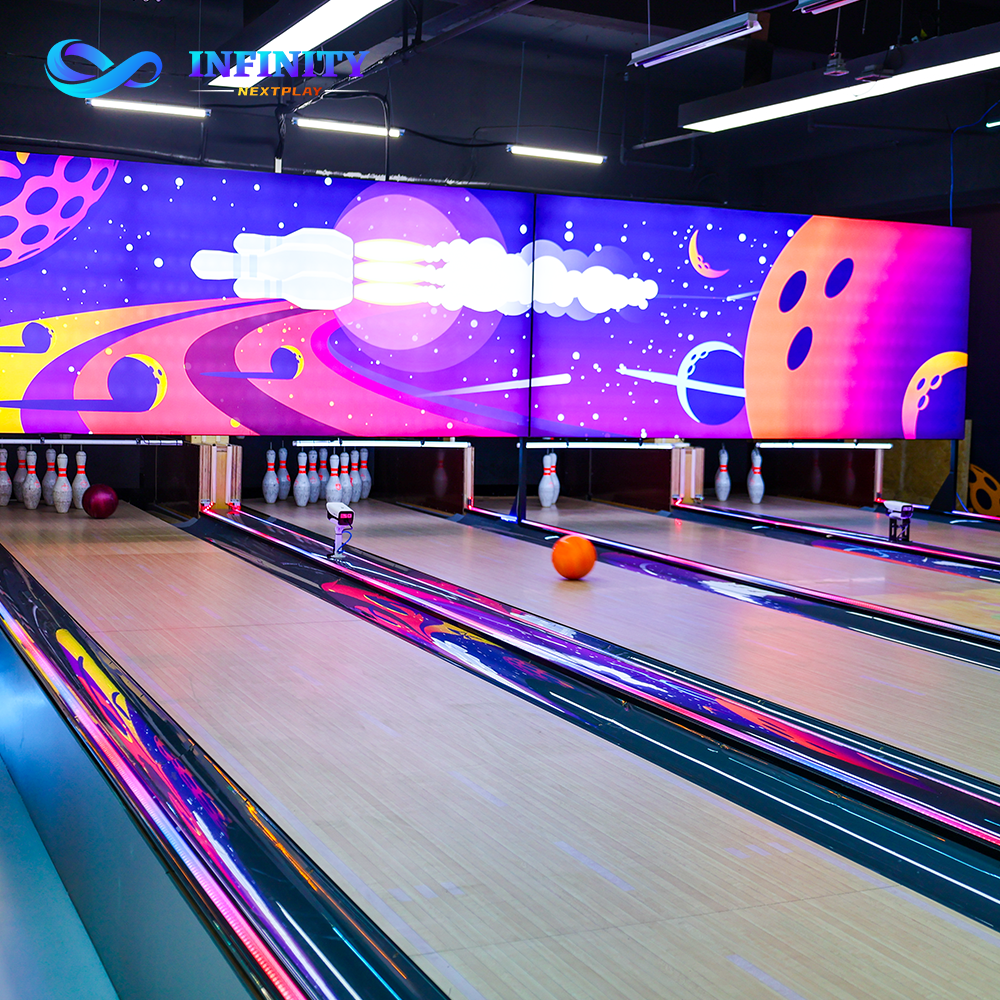
The Standard 10-Pin Bowling Alley uses the international-standard 26-meter lane, which is the same spec used in collegiate club bowling. That detail matters: it means your intramural league scores are recognized by the United States Bowling Congress collegiate division, and your top bowlers can qualify for regional tournaments. The league runs 14 weeks per semester with 32 teams of 4 players, paying $40 per team per week in entry fees — that is $2,240 a week in league revenue alone, before any food, beverage, or open-bowling income. Two lanes handle 8 teams per night on a 90-minute rotation, and the system runs until 11pm four nights a week.
What makes 10-pin work on campus where duckpin does not is the perceived legitimacy. Faculty and administrators will fund 10-pin because it is a real sport; they will not fund duckpin because it reads as a novelty. If your venue is smaller than 4,000 sq ft or you are running a satellite location, duckpin bowling is a credible alternative that fits in 60% less space, but for a flagship university recreation center, 10-pin is the right choice.
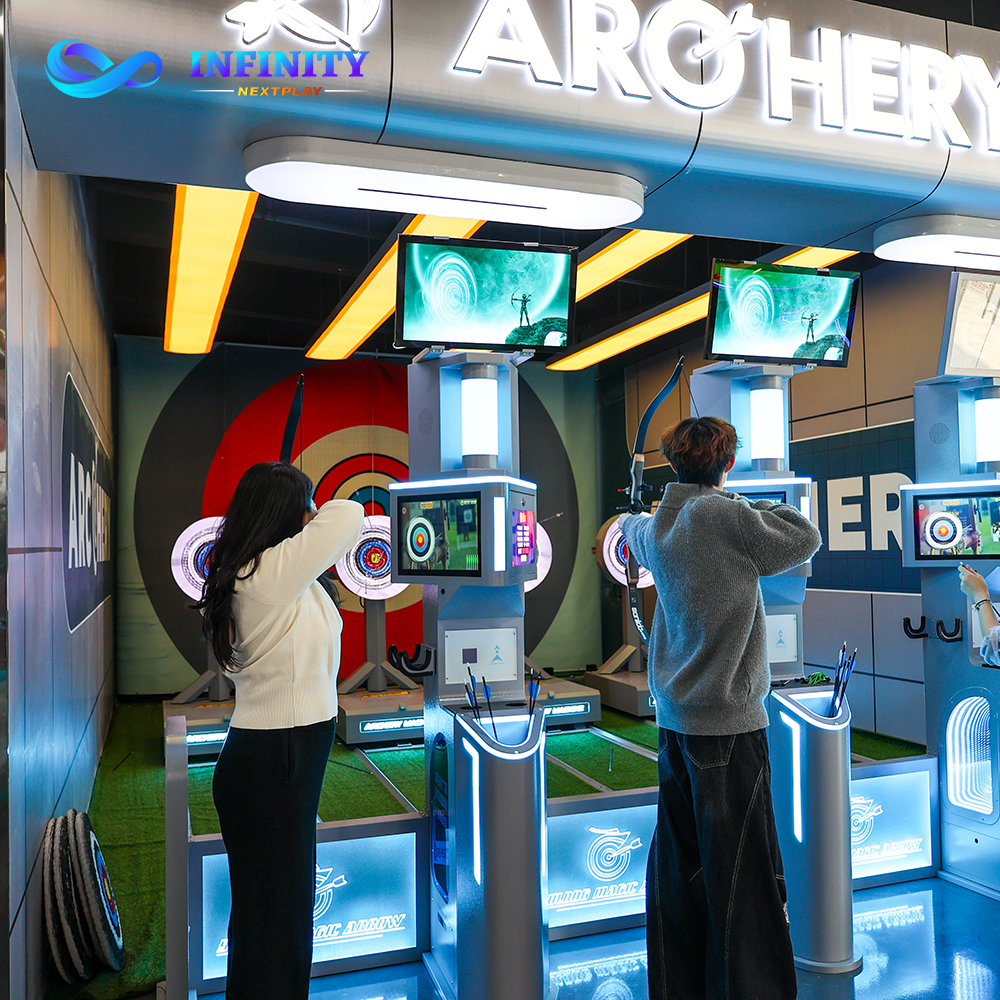
The Digital Archery Simulator A4 is the second anchor and it does something no other product in the venue can: it earns academic credit. The adjustable track distance and dual-screen scoring system meet the equipment spec for introductory archery courses in many kinesiology and physical education departments. At the Singapore campus I partnered with the School of Sport Science to offer a 1-credit archery elective that runs Tuesday and Thursday mornings — 24 students per section, two sections per semester, $85 per credit-hour revenue share. That alone is $4,080 per semester in guaranteed revenue before the doors open to the public.
The A4 is the mid-range model in the NextPlay archery lineup. If your venue is a large FEC or you expect high tournament traffic, the Professional Arcade Archery System A6 adds auto-voice scoring and a larger display — ideal for tournament broadcasts. But for a university recreation center where the priority is instructional use and intramural leagues, the A4''s adjustable track distance (which lets you set 10m, 15m, or 18m for different skill levels) is the more practical feature. The dual screen lets an instructor correct form on one display while the student shoots at the other.
Collegiate club spec, USBC-recognized league play, 4,000+ sq ft venue format. Two lanes handle 32 intramural teams per semester.
View Details →10m/15m/18m track settings, dual-screen instruction mode. Meets equipment spec for introductory kinesiology archery courses.
View Details →The Singapore campus is a private university with 11,000 undergraduates and a recreation budget that had been frozen for three years. The dean of student affairs gave me a 4,000 sq ft basement that had been used for storage and one condition: the venue had to cover its own operating costs within 18 months or it would be converted back into a computer lab. I had $48,000 in startup capital from the student capital improvement fund — $32,000 for the two 10-pin lanes (international spec, 26m, installed in 6 weeks), $9,400 for the Archery Simulator A4, $3,200 for two Dart Machine X5 units for the lounge area, and $3,400 for build-out (floor leveling, lighting, signage, POS system).
The first month was a disaster — $3,200 in revenue, mostly because no one on campus knew the venue existed. The fix was a partnership with the residential life office: every freshman orientation group got a 90-minute bowling + archery rotation as part of welcome week, free of charge to students, paid as a flat $1,800 marketing fee by the university. That put 1,400 students through the venue in 10 days, and by week four the intramural league had 32 signed-up teams. From month three the revenue curve climbed steadily: $7,800 in March, $11,200 in April, $13,900 in May, and $16,400 by July when the corporate rental program launched.
Model 1 — Student Activity Fee Block (38% of revenue, $6,232/month). The student government association pays a flat $4,800 per month for unlimited weekday access (noon to 6pm) for any student with a valid ID. That covers open bowling, archery practice, and intramural league play. An additional $1,432 per month comes from the kinesiology department''s archery elective revenue share. The block-fee structure is critical because it gives the venue a guaranteed baseline that covers rent and staff — everything else is upside.
Model 2 — Public Access Evenings (34% of revenue, $5,576/month). From 6pm to 11pm Tuesday through Sunday the venue opens to the public at $8 per bowling game and $12 per 30-minute archery session. The public rate is roughly double the per-session student rate, which prices the venue as a premium recreational option rather than a campus arcade. The Wednesday and Friday night leagues bring in 80 paying non-students per week, and the average public guest spends $14.50 on food and beverage on top of the activity fee.
Model 3 — Corporate Rentals on Weekends (28% of revenue, $4,592/month). Saturday and Sunday mornings from 9am to 1pm are blocked for corporate team-building events. The package is $1,200 for a 4-hour private rental covering up to 40 people, including bowling, archery, dart lounge access, and catered lunch. We book an average of 3.8 corporate events per month — mostly tech companies, banks, and government agencies within a 20-minute drive of campus. The margin is high because staff cost is fixed and corporate clients pay a premium for the Olympic-sport angle.
The Chicago installation is a public university recreation center with 18,500 undergraduates and a 4,500 sq ft converted gym annex. The startup budget was $54,000 because we added a third 10-pin lane and upgraded to a higher-end string-pinsetter system. String bowling uses mechanical string pinsetters that cut maintenance costs by 60% versus traditional pin boys, which matters in a union-staffed public university where labor is the largest line item. The venue launched in March 2025 and hit $19,000 monthly revenue by month five — the larger student population and cold-weather climate both help, because students want indoor activities from November through April.
The Chicago venue also added a fourth revenue model that the Singapore venue did not: faculty wellness memberships at $45 per month, which gives faculty and staff unlimited morning access (6am to 11am) before the student hours begin. That line alone generates $2,950 per month from 66 members, and it shifted the venue''s cost structure because the morning shift used to be dead time. If your campus has a significant faculty population within walking distance, this model is worth piloting.
Here is the full P&L for the Singapore venue, months 7 through 12 averaged. The numbers are in USD and reflect actual operating results, not projections. The Chicago venue runs roughly 18% higher on revenue and 12% higher on costs, because of the additional lane and higher labor rates.
| Line Item | Monthly Amount | Annual | Notes |
|---|---|---|---|
| Student activity fee block | $6,232 | $74,784 | SGA + kinesiology share |
| Public access evenings | $5,576 | $66,912 | Tue–Sun 6pm to 11pm |
| Corporate weekend rentals | $4,592 | $55,104 | ~3.8 events/month at $1,200 |
| Gross Revenue | $16,400 | $196,800 | |
| Rent & utilities (campus share) | $2,800 | $33,600 | Negotiated with facilities |
| Staff (2 FT + 6 student PT) | $5,400 | $64,800 | Student labor at $11/hr |
| Equipment maintenance | $680 | $8,160 | Lanes + A4 + dart machines |
| Supplies & COGS (food bev) | $1,920 | $23,040 | ~30% of F&B revenue |
| Marketing & insurance | $540 | $6,480 | Mostly insurance |
| Total Operating Costs | $11,340 | $136,080 | |
| Net Operating Income | $5,060 | $60,720 | 31% margin |
At $5,060 net per month the venue pays back the $48,000 startup in 9.5 months of operations, but the realistic payback including the low-revenue first three months is 14 months. That is well within the dean''s 18-month deadline and leaves a comfortable margin for unexpected repairs or a slow semester.
One of the most common questions I get from campus recreation directors is whether to go with 10-pin, string, or duckpin bowling — and whether the A4 or A6 archery simulator is the better fit. The answer depends on your venue size, your student population, and whether you want to host tournaments. Here is the side-by-side comparison I send to every prospect.
| Spec | 10-Pin (26m lane) | String Bowling | Duckpin |
|---|---|---|---|
| Min venue size | 4,000 sq ft | 2,800 sq ft | 1,800 sq ft |
| League legitimacy | USBC collegiate | Recreational | Casual / novelty |
| Per-lane startup cost | $16,000 | $11,500 | $7,200 |
| Maintenance (monthly) | $320 | $180 | $140 |
| Game duration | 45 min | 35 min | 10 min |
| Best fit | Flagship campus rec | Satellite campus | Student lounge / bar |
| Spec | Archery A4 | Archery A6 |
|---|---|---|
| Track distance | 10/15/18m adjustable | 18m fixed |
| Display | Dual screen (instructor + shooter) | Dual display + auto-voice scoring |
| Startup cost | $9,400 | $13,800 |
| Best fit | Instructional + intramural | Tournament + FEC |
The pitch that worked in Singapore was a one-page memo comparing the proposed venue to the existing $72,000/year subsidized arcade. The memo had three numbers: $48,000 one-time startup, $16,400 projected monthly revenue, 14-month payback. The angle that closed the deal was the academic legitimacy of 10-pin and archery — both Olympic-recognized, both eligible for physical education credit. Deans do not fund arcades, but they do fund sports facilities.
10-pin bowling requires a 26-meter clear span, which rules out most basement spaces with columns. The Singapore venue used a basement that had been a storage room with a single row of pillars down the middle — we installed the two lanes on either side of the pillars and used the pillar row as a natural divider between bowling and archery. If your space has a column grid tighter than 6 meters, switch to string bowling or duckpin. Ceiling height needs to be at least 3.2 meters for the pinsetter clearance.
The single most important revenue decision is the SGA block fee. Without it, your venue is at the mercy of walk-in traffic, which on a campus means you are busy for 8 weeks a semester and dead the rest of the time. The pitch to student government is simple: for $4,800/month, every student gets unlimited weekday access to a venue that would otherwise charge $8 per bowling game. The SGA wins because they can campaign on having "delivered" a premium recreation facility; you win because you have guaranteed baseline revenue.
Leagues are what fill the venue on Tuesday and Thursday nights when there is no natural traffic. Run two 14-week semesters with 32 teams of 4 players each, charging $40 per team per week. The league entry fee includes league play, end-of-semester trophies, and a championship pizza party. The structure matters because 32 teams means 128 paying students per week — at $10 per student per week, that is $1,280 per week in league revenue, before any food and beverage.
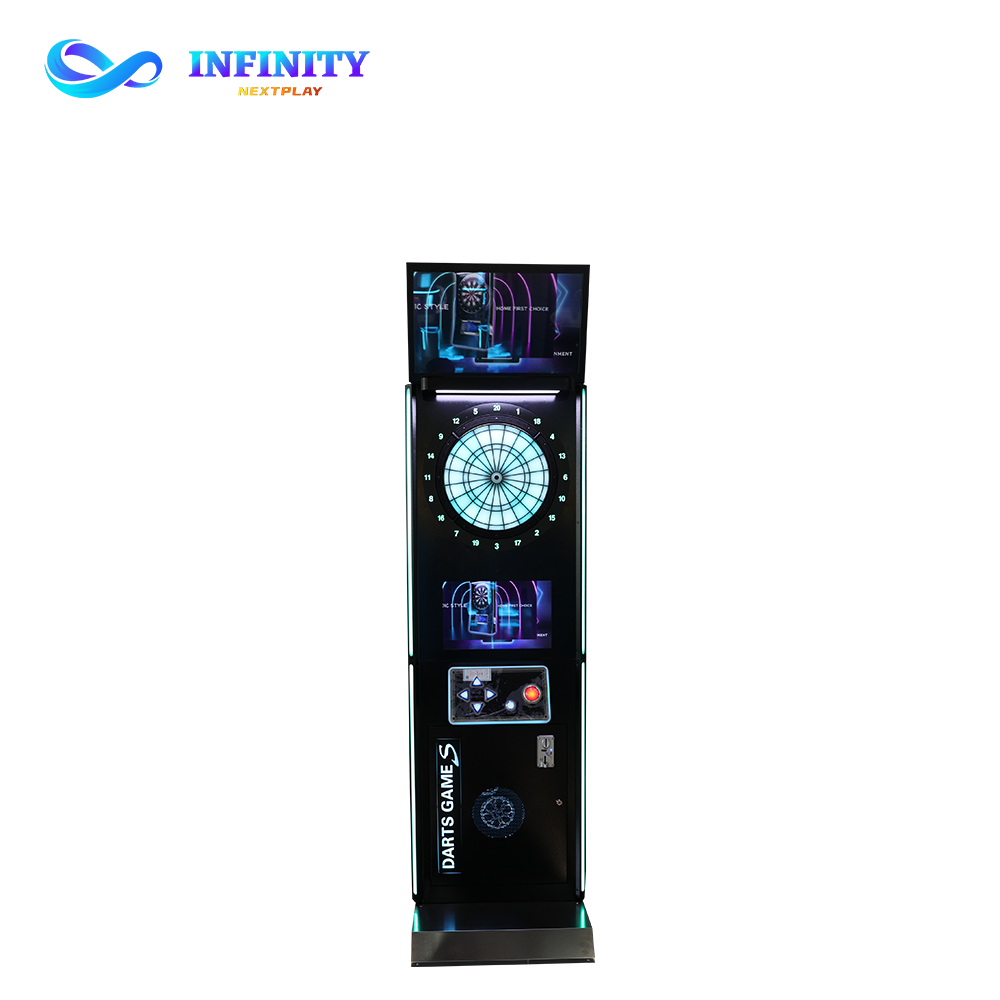
The dead hours on a campus recreation venue are 2pm to 5pm on weekdays, when students are in class and the venue is technically open but empty. The fix is a dart lounge with two Dart Machine X5 units, which run on coin operation and need no staff supervision. The X5 is coin-operated and card-reader-ready, which means students can swipe in and play without staff intervention. Two X5 units generate $680 to $940 a month in low-traffic hours — small in absolute terms, but it turns dead time into positive-margin revenue.
Unstaffed operation for low-traffic hours. Two units fill 2pm to 5pm dead time on a campus recreation schedule.
View Details →The most common mistake is buying cheap equipment that breaks down in the first semester. The Singapore installation originally considered a no-name 10-pin lane from a local supplier that was $9,000 cheaper, but the maintenance record showed 14 days of downtime per year versus 2 days for the international-standard spec. On a campus where students pay activity fees for access, two weeks of downtime is a credibility crisis — student government will not renew the block fee. The other common mistake is skipping the dart lounge and trying to fill the dead hours with food and beverage alone, which has lower margins and requires more staff.
A subtler mistake is underpricing public access. The temptation is to charge $4 or $5 per game to "be affordable to students," but public access is not for students — it is for the off-campus community who can pay premium rates. Pricing at $8 per game positions the venue as a premium recreational option, which is what justifies the $1,200 corporate rental rate on weekends. If you underprice public access, you cannibalize the corporate rental business because companies will just book individual lanes instead of the private event package.
Q: How long does installation take for a two-lane 10-pin bowling setup on a campus?
A: Six weeks from delivery to first league night, assuming the space is already cleared and floor-leveled. The 26m lanes arrive in pre-fab sections and the pinsetter install takes 10 working days. Plan the install during summer break or winter intersession to avoid disrupting student activities.
Q: Can the Archery Simulator A4 be used for actual physical education credit?
A: That depends on your institution''s kinesiology department. The A4''s adjustable track distance and dual-screen instruction mode meet the equipment spec at many universities, but you need a partnership with the academic department and an instructor with archery coaching certification. The Singapore campus runs it as a 1-credit elective through the School of Sport Science.
Q: What is the typical insurance cost for a campus bowling + archery venue?
A: Insurance runs about $440 per month in Singapore and $620 per month in Chicago, included in the marketing & insurance line of the P&L above. Archery simulators are classified as low-risk because the arrows are blunt-tipped and the lane is enclosed, so the insurance rate is comparable to a standard recreation facility.
Q: How do you handle staffing during low-traffic hours?
A: The dart lounge runs unstaffed using the coin-operated X5 machines, and one student worker covers the front desk and bowling lane resets from 11am to 6pm. From 6pm to 11pm we run two student workers, and corporate weekend events have one full-time manager plus three student workers. The total payroll is $5,400 per month for 2 FT and 6 PT staff.
Q: Does the venue work on a commuter campus where students leave at 5pm?
A: It can, but the revenue mix shifts. On a commuter campus the student activity fee block is smaller (more like $3,200/month) and you lean harder on public access and corporate rentals. The Chicago venue is closer to this model — 31% of revenue from public access versus 34% in Singapore — and it still hits $19K/month because the corporate rental market in Chicago is deeper.
Q: Can I start with just one 10-pin lane and add the second later?
A: Technically yes, but I do not recommend it. One lane caps your league capacity at 16 teams per night, which is not enough to support a full intramural program. The fixed costs (rent, staff, insurance) are nearly the same for one lane or two, so the second lane pays for itself within 5 months of operations.
Get a free 3D layout for your space. No commitment required.
The reason 10-pin bowling and archery beat every other recreation format on a university campus is not that they are the most exciting — they are not. The reason is that they are the only two activities that simultaneously satisfy a budget committee, an academic department, a student government, and a corporate rental client. The budget committee sees Olympic-recognized sports with a 14-month payback. The kinesiology department sees an instructional archery lab. Student government sees a premium recreation facility they can campaign on. Corporate clients see a team-building venue that feels more substantive than a bowling alley and more grown-up than an arcade. No other format I have installed in 30+ venues across 12 countries does all four at once.
If you are a campus recreation director evaluating formats, the question is not whether 10-pin plus archery will work — the data above shows it works. The question is whether your specific space, student population, and corporate rental market will support the $48,000 to $54,000 startup. If you have at least 4,000 sq ft of clear span, 8,000 or more undergraduates, and a corporate base within a 20-minute drive, the math says yes. The next step is a free 3D layout of your specific space — that is what the orange button above is for.
Home / Blog