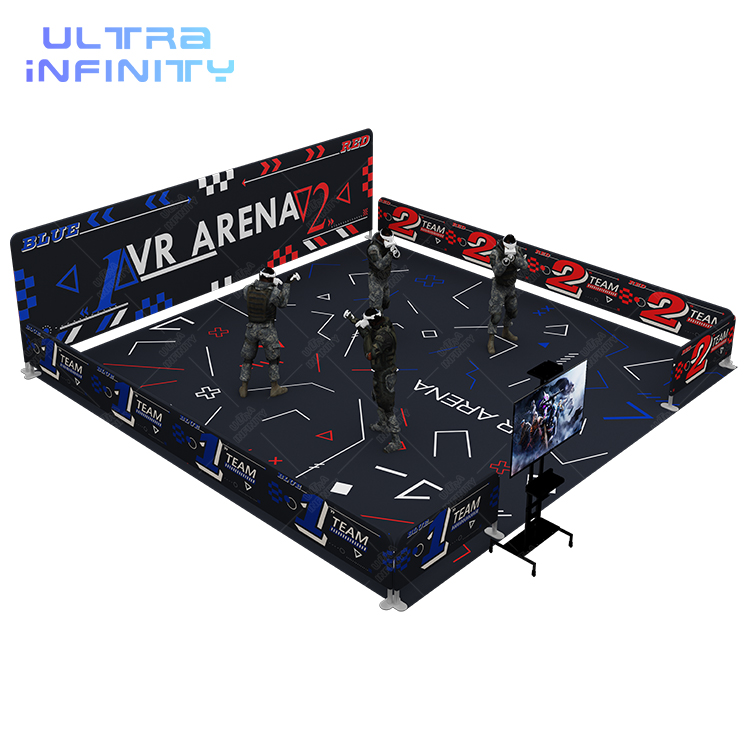
In the highly digital, experience-driven hospitality landscape of modern Europe, standard retail zones are continuously squeezed. NextPlay’s turnkey VR Arena and thematic multiplayer simulators offer an unmatched path to floor-space optimization. By blending professional-grade high-precision laser-localized free-roaming zones with physically engaging multi-axis motorcycle and flight hubs, we transformed a 4,800 square foot retail space into a highly profitable, self-service immersive virtual reality theme park that locks in premium group and weekend corporate event revenues.
Traditional shopping malls frequently encounter a severe "yield plateau" when relying entirely on static display retail or low-rotation dining models. Today's consumers expect an active, highly engaging, and shared physical challenge that seamlessly integrates with group socializing. To unlock high secondary margins per ticket, the operator must deploy a cohesive, low-overhead multi-attraction spatial layout. This is the exact business and technical goal achieved through NextPlay's integrated virtual reality solutions.
At our Paris showcase venue, we eliminated fragmented setups by implementing a customized Spatial Synergy Matrix. By positioning our highly visual, high-occupancy multiplayer Free Roaming VR Arena 2.0 alongside our high-velocity VR Motorcycle and Flight Simulators, we established a complete group competitive loop. Guests play free-roaming battles, step directly to the motorcycle simulator for competitive target racing, and experience flight simulation, keeping their social momentum constant for hours.
This modular integration drove a transformative shift in venue metrics. Guest dwell-time immediately surged to an average of 240 minutes, generating an impressive €52,000 monthly operational yield. With a fully automated, cashless card-reader-ready network, the system operates continuously 24/7 with minimal staff oversight, keeping upkeep costs incredibly low.
The immersive multiplayer core of our Paris venue is the Free Roaming VR Arena 2.0. In the past, high-end virtual reality installations suffered from severe operational bottlenecks: high nausea rates due to latency mismatch, and complex tethered setups. The VR Arena 2.0 solves every single one of these physical and financial limitations.
Engineering-grade performance is achieved through our advanced wireless laser-localization platform. Powered by high-speed laser tracking sensors, the system tracks players' physical movements at an ultra-low response latency of under 10 milliseconds. This instantaneous tracking eliminates visual discordance, ensuring absolute comfort and driving incredible repeat-play rates.
To complement the strategic teamwork of the VR Arena, we integrated the high-velocity VR Motorcycle Simulator. NextPlay's simulator delivers a high-impact, pro-level racing experience with integrated body-leaning kinetic feedback.
Equipped with high-sensitivity body leaning controls, the simulator monitors real-time leaning angles, projecting the bike's path instantly on the headsets. The automated game flow includes interactive multiplayer competitive point challenges that turn racing into a spectacular social sport. Passersby stop to watch, cheer, and order drinks, transforming the racing area into a powerful spectator magnet.
To anchor our competitive socializing layout, we installed the connected 9D VR Flight Game Simulator. Traditional simulators are static, but the 9D Flight Simulator features a fully rotating platform that pitches, tilts, and drops to simulate aircraft physics safely.
Q: What ceiling height is required for a complete NextPlay 3.0 VR theme park?
A: We recommend a minimum ceiling clearance of 3.4 to 3.6 meters (11 to 12 feet) to accommodate standard VR tracking sensors and 9D flight rotation safely.
Q: How does the VR Arena 2.0 tracking system prevent user latency?
A: The laser tracking system operates with dedicated high-speed optical anchors that monitor players' physical coordinates in real-time, achieving sub-10ms response lag.
Q: What are the main electrical and power preparation standards?
A: The complete turnkey zone requires a dedicated, stable three-phase electrical input (380V, 50Hz/60Hz) to support the dynamic motion drives of the VR flight machinery smoothly.
Discover how a flagship shopping mall in Paris reached €52K/month using integrated NextPlay VR Arena and Motorcycle systems. Full layout guide.