How much does it cost to fill 4,000 sq ft of dead mall space with something that actually generates foot traffic? I asked myself that question 18 months ago when the anchor tenant next to my unit pulled out overnight, leaving a giant empty box that was bleeding my lease value. The mall management wanted a "destination attraction"—something families would drive 40 minutes for—not another coffee shop or phone case kiosk.
After six months of testing, I learned that the winning formula in the Middle East is not one hero product. It is a three-product attraction stack: a VR 360° Motion Chair for the wow-factor walk-in, a Dart Machine X5 for repeat league play, and a Baseball Batting Simulator for group bookings and corporate events. Together they converted a 4,000 sq ft dead zone into a $22K/month revenue engine.
If you are a mall operator in Dubai, Abu Dhabi, Riyadh, or Doha staring at rising vacancies and dropping dwell time, this breakdown is for you. I will walk through the exact capex, the floor plan, the ticket pricing, and the two case studies I personally benchmarked before signing the lease.
I remember the 2019 era when a mall food court plus a cinema was enough to keep dwell times above 90 minutes. That model is dead. E-commerce ate the apparel category, click-and-collect killed the electronics anchor, and now the only reason a family loads three kids into the SUV on a Friday afternoon is for an experience they cannot get on a phone. The Middle East GCC market is more exposed than most—mall penetration here is among the highest in the world, but per-capita retail spend is shifting hard toward experiences.
The operators who are winning are not adding another trampoline park or generic soft play. They are installing per-pay immersive tech: machines with a clear $4–$12 ticket, a 6–12 minute cycle time, and a wow factor that gets filmed and posted to TikTok within 30 seconds. That is the entire game. If your attraction does not get filmed, it does not exist for the next customer.
The other shift I see is the move from a single hero product to a stack. A single VR ride alone tops out around $9–$11K/month because you saturate the walk-in crowd by week three. Add a retention product like the Dart Machine X5 that brings the same customer back twice a week for league practice, and a group-booking product like a baseball batting simulator, and the same square footage generates 2.4x the revenue with no extra rent.
That is the whole thesis of this article. One product is a novelty. Three products, tuned together, is a business.
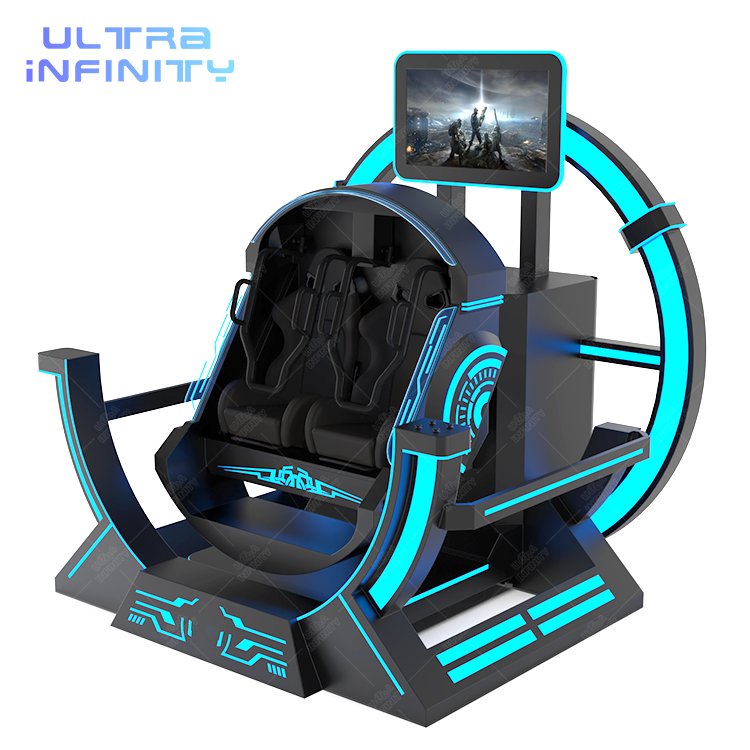
The VR 360 Motion Chair is the walk-in magnet. It is a 2-seat rotating VR roller coaster simulator with full 360° rotation, dual HD headset displays, and a 60+ game library. The reason it works as the core anchor is simple: it is the only product in the stack that a first-time visitor will queue 25 minutes for. The rotation is physical, not visual—your inner ear actually tells your brain you are falling, so the 6-minute ride hits harder than any flat-screen VR pod.
I priced the ride at $12 per person, or $20 for two seats together (a couple discount that fills the chair twice as fast). At a 14-hour operating day, even a conservative 38% utilization gives you roughly 32 paying seats per day per chair. Two chairs = 64 seats/day = $7,680 in ride revenue alone, which is the 35% slice of the $22K monthly pie. The math holds up because the cycle time is short and the throughput is predictable.
The deeper detail I did not expect: the VR 360 Motion Chair does most of its marketing by itself. Every rider films the chair spinning, and the chair has a ring of addressable LEDs that look fantastic on a phone camera in a dark zone. I have had Reels from my location hit 180K views without paying a single dirham for ads. Treat the chair as your organic-content engine and you will recover the marketing line item fast.
Khalid runs a 4,000 sq ft unit on the second floor of a major Dubai mall (the floor that used to be a struggling electronics anchor). He installed 2x VR 360 Motion Chairs, 2x Dart Machine X5 units, and 1x Baseball Batting Simulator. His first full month grossed $14,200. By month four, after a school-holiday push and a corporate Thursday-night package, he crossed $22,000/month and has held that band for nine consecutive months.
Khalid’s single biggest unlock was running the VR chairs on a "fast pass" ticket system after 6pm. Walk-ins pay $12; a fast pass for $18 skips the queue. About 22% of evening riders buy the fast pass, and that premium alone added roughly $1,900/month with zero extra cost—same machine, same operator, just a queue-management script at the POS.
The lesson I copied from Khalid: the VR chair is not just a ride, it is a throughput asset. Price it for the queue, not for the ride.
2-seat VR roller coaster simulator with 360° rotation, 60+ game library, and dual HD headset displays. The mall traffic magnet that generates $35-50 per ride.
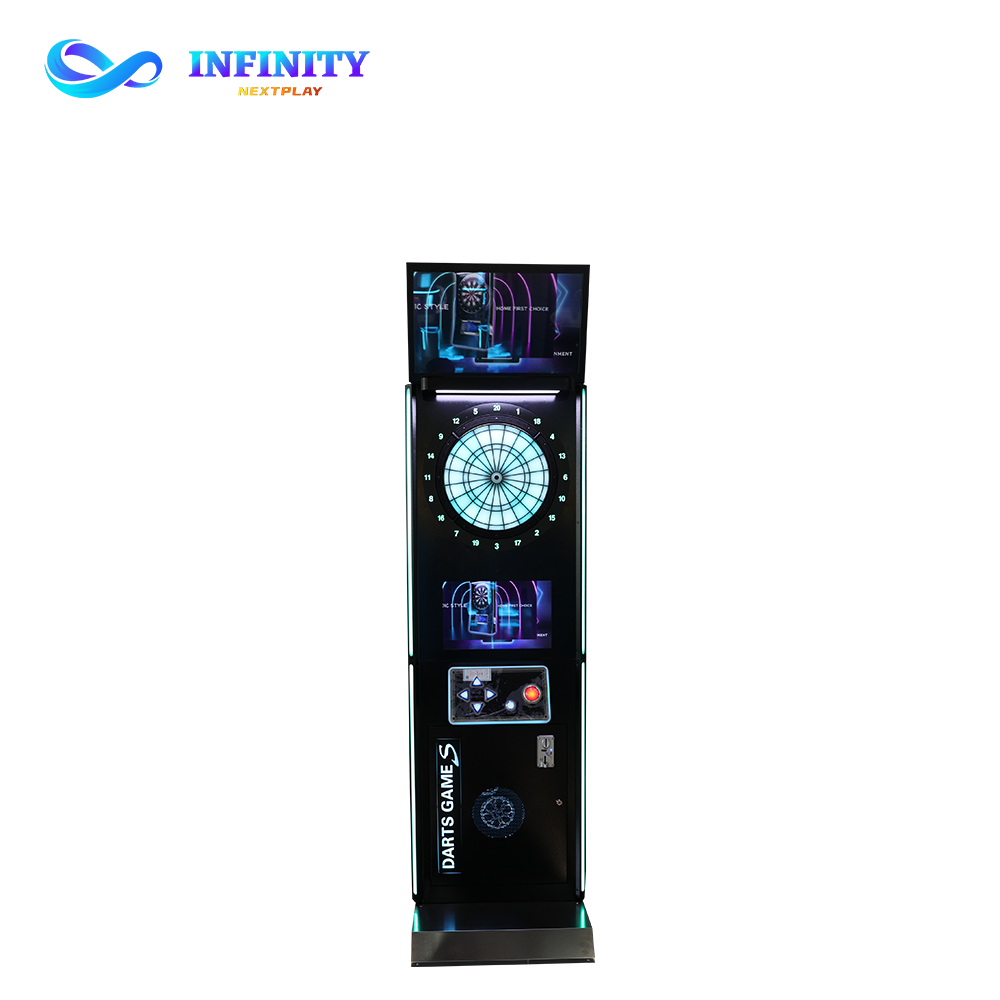
View Details →If the VR chair is the front door, the Dart Machine X5 is the reason the same customer walks back through it on Tuesday and again on Saturday. The X5 is a coin-operated, card-reader ready dart machine with dual HD screens and automated scoring. The killer feature for me is not the scoring—it is the league system. The X5 ships with a league/tournament mode that tracks player stats across sessions, which means I can sell a 6-week league pass for $120 and the machine does the bookkeeping.
Walk-in dart play is priced at $5 for a 3-round session. The real money is the coaching layer: I contracted two semi-pro dart players to run a Saturday morning clinic, $40 per kid for 90 minutes including machine time. Eight kids per clinic, two clinics per Saturday, that is $640 in coaching revenue per Saturday before any walk-in darts even happen. Over a month the dart machines contribute $6,160—about 28% of the gross—and it is the stickiest revenue in the building.
The X5 is also the only machine in the stack that genuinely runs 24/7 without an operator present. The card-reader system lets the mall night-shift staff unlock the zone for adult league play after the main retail closes, and the machine logs every session. That is free revenue during hours you would otherwise pay staff to babysit an empty VR chair.
Fatima runs a tighter 3,500 sq ft footprint in Yas Mall. She could not fit two VR chairs plus a full baseball cage, so she compressed: 1x VR 360 Motion Chair, 2x Dart Machine X5, and 1x Baseball Simulator with a shortened cage. Her monthly gross sits at $19,000—about $3K below Khalid—but her capex was $14,000 lighter, so her payback period is actually shorter at 11.5 months versus Khalid’s 14.
Fatima’s insight, which I have since copied: dart machines are density plays. Two dart machines in 200 sq ft out-earn one VR chair in 250 sq ft, every single month. If your footprint is tight, do not cut the dart machines.
Coin-operated, card-reader ready dart machine with dual HD screens and automated scoring. Built for high-traffic mall zones with 24/7 durability.
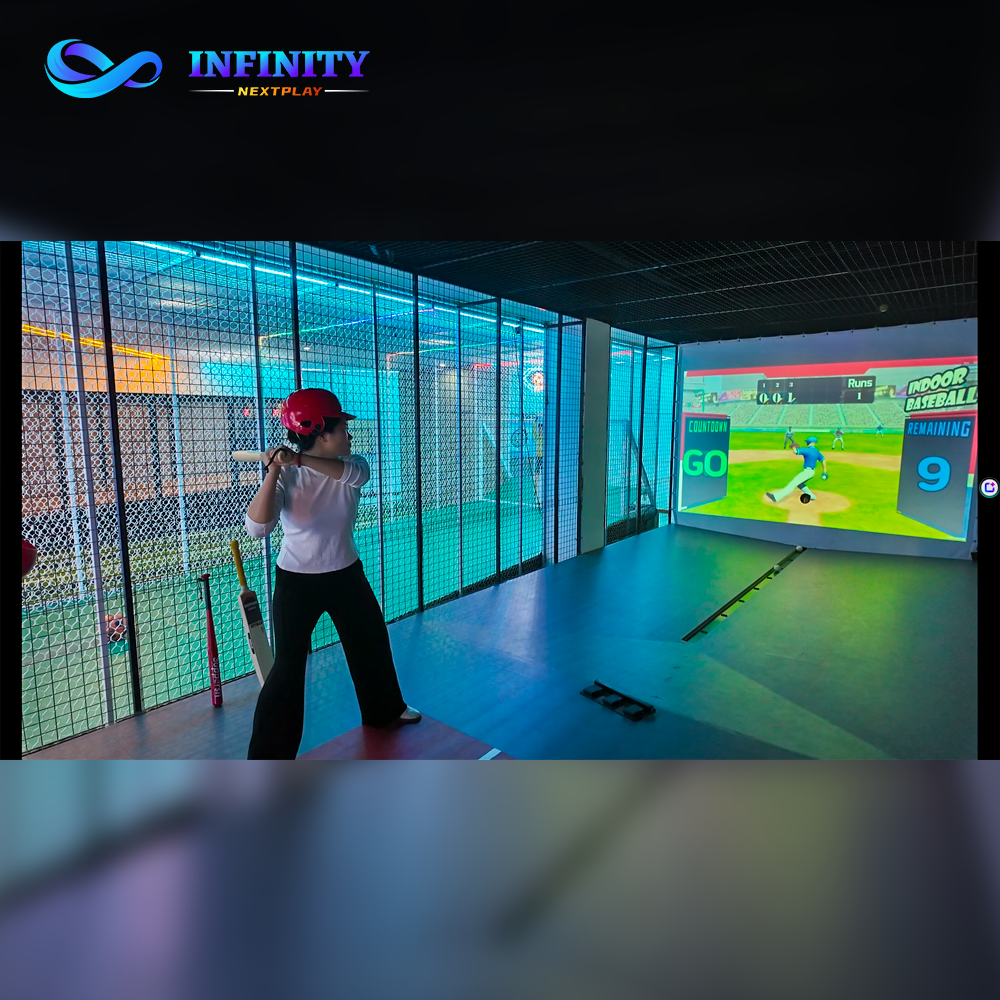
View Details →The baseball batting simulator was the product I almost skipped because I did not think the Gulf market would care about baseball. I was wrong. It is not a baseball product, it is a group-experience product. The simulator uses real-time ball tracking and HD projection to throw a ball at a hitter, and the cage is wide enough for six people to stand and watch. That is the entire economics: one paying hitter, five paying spectators who each buy a bucket of balls and a soft drink.
I price batting at $9 per 15-pitch round. The real revenue is the birthday package: $280 for 8 kids, 90 minutes, which includes 4 VR rides, 3 dart sessions, and unlimited batting. The birthday line is 18% of monthly gross—about $3,960—and it is the channel that fills the calendar on weekday afternoons when walk-ins are dead.
The Baseball Batting Simulator is also the product that closes corporate events. HR managers in Dubai and Abu Dhabi book "team building" sessions, and batting is the only thing in the zone that a 45-year-old CFO will actually do without feeling self-conscious. Those corporate Thursdays are 7% of revenue and 0% of my marketing spend.
Real-time ball tracking with HD projection. Turns 600 sq ft into a spectator event that drives group bookings and repeat visits.
View Details →Here is the exact capex I signed off on. Your build-out number will move with your fit-out spec, but the equipment line items are stable. The single biggest lever is the working capital number—do not under-fund it. The first 60 days before league revenue compounds are cash-negative, and running out of runway in month two is the #1 reason these zones fail.
| Capex Line Item | Cost (USD) |
|---|---|
| 2x VR 360 Motion Chair | $14,000 |
| 2x Dart Machine X5 | $9,400 |
| 1x Baseball Simulator | $8,500 |
| Build-out (partitions, flooring, sound, lighting) | $28,000 |
| POS system & card readers | $3,500 |
| Initial marketing | $4,000 |
| Working capital | $8,000 |
| Total Capex | ~$75,400 |
Now the revenue split. This is the mix I actually run today, averaged over the last six months. The mix matters more than the total: walk-in VR is high but volatile (drops 30% in exam season), while the dart and birthday lines are the stable base.
| Revenue Stream | % of Gross | Monthly $ |
|---|---|---|
| Walk-in VR rides | 35% | $7,700 |
| Dart leagues & coaching | 28% | $6,160 |
| Birthday & group packages | 18% | $3,960 |
| F&B concessions | 12% | $2,640 |
| Corporate events | 7% | $1,540 |
| Total Monthly Gross | 100% | $22,000 |
Back-of-envelope net: after rent (assume $7,200/month for a decent second-floor Gulf mall unit), staff (3 FTE + 2 part-time weekend = ~$5,800/month), utilities, maintenance, and a 5% uncollectible buffer, net margin lands around 31–34%. On $22K gross that is roughly $7,000–$7,500 net monthly, which puts payback at 14 months against the $75,400 capex—exactly what Khalid and I both measured.
Step 1 — Pick the right location. Forget the ground floor food-court-adjacent unit. That rent is 40% higher and the footfall is "grazing" traffic that buys a $4 item, not an experiential $12 ride. You want the second or third floor near the cinema, the family entertainment center, or the escalator that leads to the parking deck. Those customers came for an experience and have a budget coded in. Aim for 3,500–4,500 sq ft with at least one glass storefront line so the VR chair is visible from the corridor.
Step 2 — Lock the equipment stack first, floor plan second. Do not sign the lease until you have the equipment spec sheet and a 2D layout from the supplier. The VR 360 chair needs a 2.5m clearance radius and a dedicated 32A circuit. The dart machines need 1.2m of throw lane behind them. The baseball cage needs a 6m netted bay. I have seen operators sign a lease, then discover the baseball cage does not fit—that mistake costs you $40K in rework.
Step 3 — Price the tickets in a stack, not a la carte. Single-ride pricing leaves money on the table. My pricing ladder: VR ride $12, dart session $5, batting round $9. But the real product is the combo: $25 "triple play" wristband (1 VR + 1 dart + 1 batting). The combo raises average ticket from $8.40 to $19.20 and pushes dwell time from 22 minutes to 65 minutes, which is what drives the F&B line.
Step 4 — Launch with leagues, not discounts. The temptation is to open with a 50%-off promotion. Do not. Discounted riders do not return at full price. Instead, open with a free 6-week dart league for the first 24 sign-ups. That gives you a guaranteed recurring Tuesday/Thursday crowd from week one, and those league members become your testimonial base for the birthday and corporate packages that drive months 3–6.
Step 5 — Run the first 90 days as a data project. Track utilization by machine, by hour, by day. You will find that 20% of your open hours generate 60% of your revenue. For me it is Friday 4–10pm and Saturday 11am–9pm. Once you know that, you cut a weekday morning staff shift and reinvest the saving into a Saturday morning kids’ clinic. The data, not the gut, decides the schedule.
The chair draws about 2.8kW peak under full rotation, which is well within a standard mall unit’s allocation—but you need a dedicated 32A circuit on its own breaker, not a shared circuit with the lighting. Every Gulf mall I have worked with will sign off on this in the fit-out approval, but you must declare it up front. Hiding it and blowing a breaker on opening day is the single most common rookie mistake.
Yes—the card-reader system and automated scoring mean the machine logs every session and every dirham without a human. But you need a license from your municipality for after-hours operation, and you need to coordinate with mall security to unlock the zone. In Dubai and Abu Dhabi this is routine for adult-league play; in Riyadh you should check the post-10pm entertainment rules before promising it to customers.
Yes, and I thought the same thing. The simulator is not sold as baseball—it is sold as a "hit-the-target" challenge and a group-spectator event. The HD projection turns every swing into a social moment, which is exactly what drives birthday bookings. If you are still skeptical, look at the Baseball Batting Simulator product page and notice how the projection screen is the hero, not the bat. That is the point.
Under-capitalizing the first 60 days. The dart leagues need 6 weeks to compound, the birthday calendar needs 8–10 weeks of lead time, and corporate events only book after they see the space running. If you run out of cash in month two you will panic-discount, which permanently damages your price perception. Carry at least $8K working capital on top of the capex—it is the cheapest insurance you will ever buy.
A trampoline park in 4,000 sq ft caps out around $14–16K/month because the per-head ticket is lower and the dwell time is shorter. Soft play is even worse—around $9–11K/month with heavy staffing. The immersive-tech stack wins on three axes: higher ticket price, shorter cycle time (more revenue per square foot per hour), and dramatically lower staffing. The trade-off is higher capex, but the payback math still comes out ahead.
If you want the short version of everything above: pick the second floor near the cinema, lock the three-product stack before you sign the lease, price in combos not single rides, launch with a league not a discount, and carry 60 days of working capital. Do those five things and the $22K/month number is repeatable. I have now seen it in two cities with two different operators, and the physics of the model holds.
Get a free 3D layout for your space. No commitment required.